
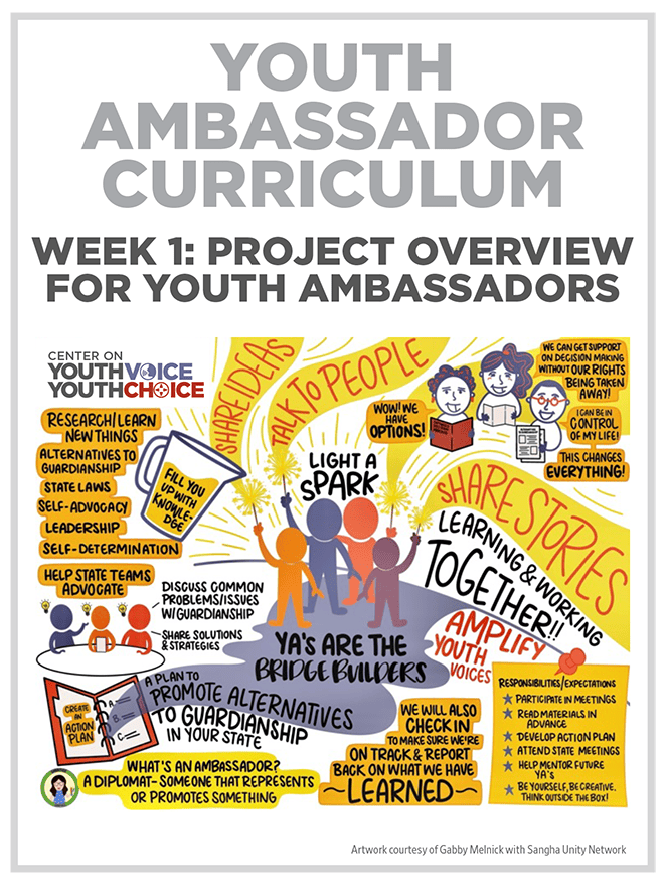
Week 1: Project Overview for Youth Ambassadors
Week 1 gives Youth Ambassadors an overview of the CYVYC project—what the problem is, why their leadership matters, and how they’ll research, advocate, and work with mentors and state teams to promote alternatives to guardianship. It walks through the plan, key activities, and the teamwork needed to “light a spark” in their states.
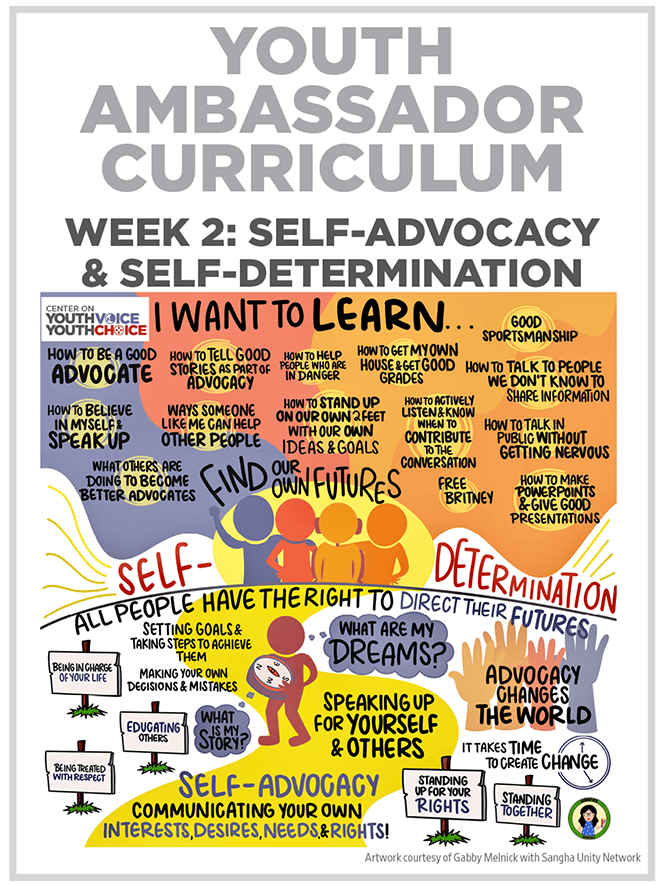
Week 2: Self-Advocacy & Self-Determination
Week 2 introduces Youth Ambassadors to the core ideas of self-advocacy and self-determination—what they mean, why they matter, and how youth can speak up for themselves and others. It highlights the skills, rights, and actions that help young people take charge of their lives and make their voices heard.
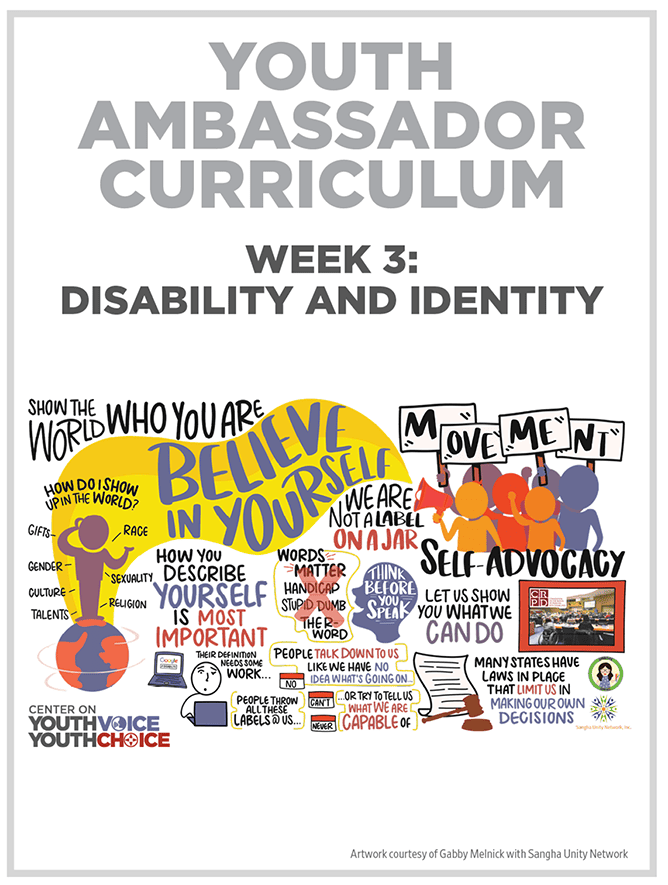
Week 3: Disabilty and Identity
Week 3 explores what disability and identity mean - medically, legally, socially, and personally - and how youth can understand, define, and embrace their own identities. It encourages reflection, discussion, and empowerment through self-advocacy and positive self-definition.
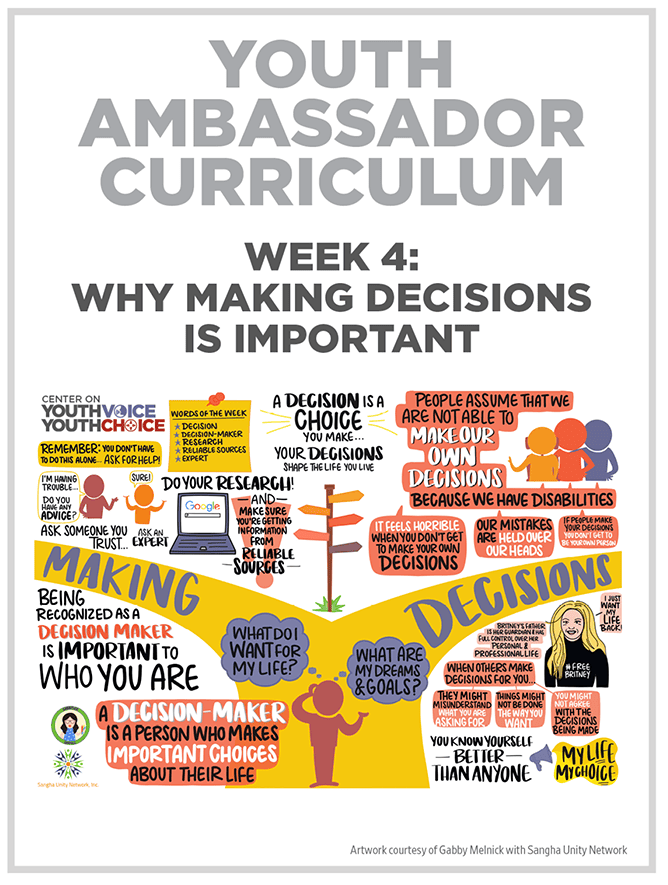
Week 4: Why Making Decisions is Important
Week 4 covers the value of self-determination in decision-making, discussing why it's crucial to make your own choices and how to seek help when navigating difficult decisions. It specifically addresses how misconceptions about disability can impact a person's right to be a decision-maker and emphasizes that it is acceptable to seek advice or research for major life choices.
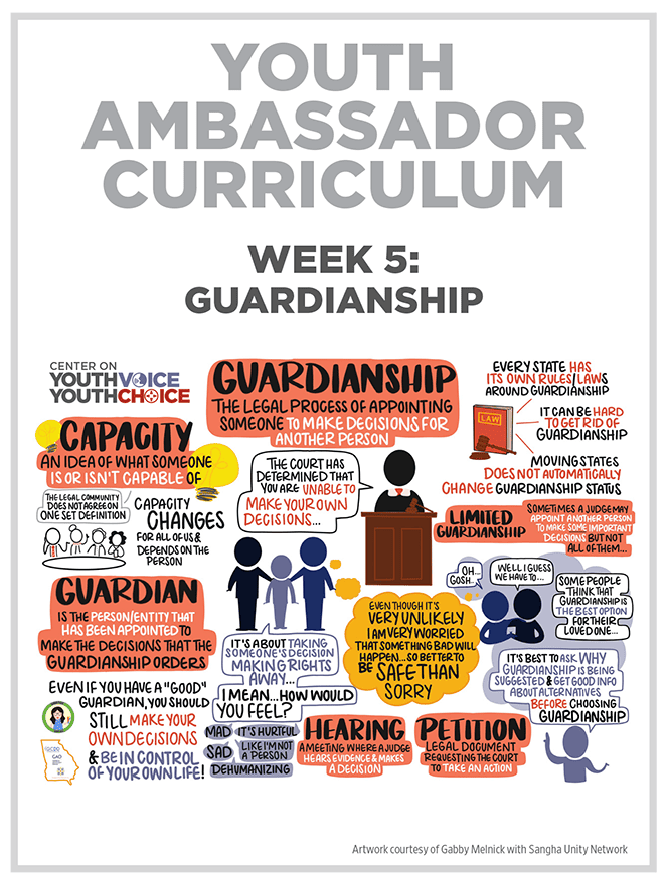
Week 5: Guardianship
Week 5 of the curriculum defines guardianship as a legal process where one person is given authority to make major decisions and have a big say in the life of another. It explores the facts, different kinds of guardianship, the rights of those under guardianship, and how to change or undo a guardianship.
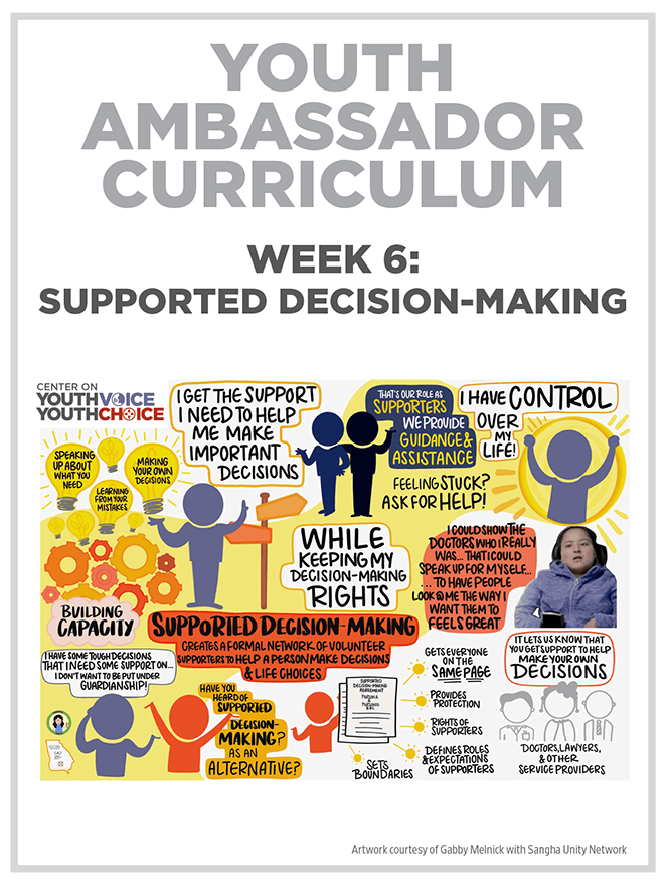
Week 6: Supported Decision-Making
Week 6 on Supported Decision-Making explains this process as a way for individuals, particularly those with disabilities, to receive the right support at the right time to live as independently as possible. It details who can be a supporter and introduces the optional Supported Decision-Making Agreement, which formally allows supporters to help access information and communicate decisions.
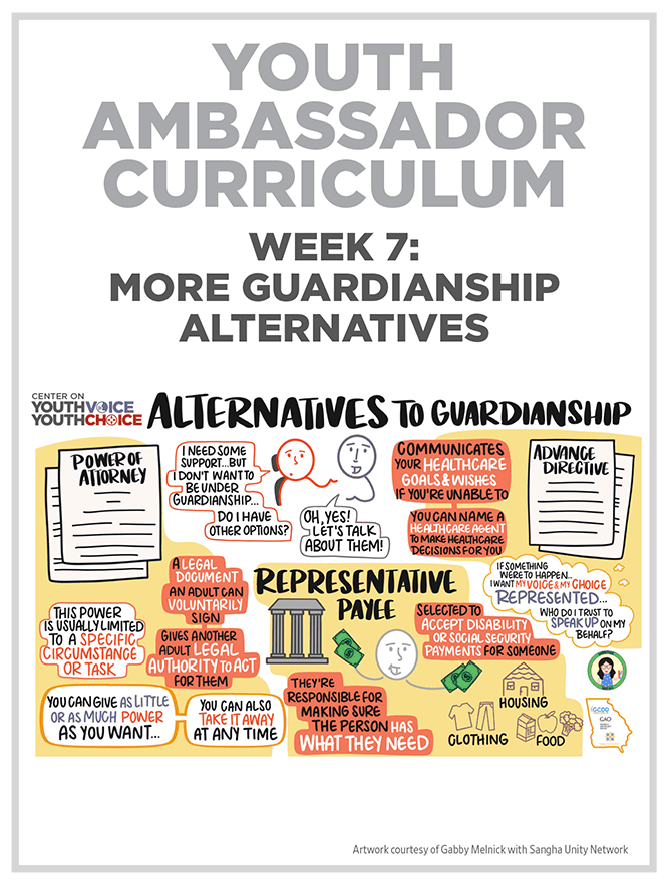
Week 7: More Guardianship Alternatives
Week 7 explores legal and practical alternatives to guardianship that help individuals stay in control of their lives. It covers tools like Power of Attorney, advance directives, and representative payee, which let people choose supporters for specific decisions while keeping their own decision-making rights, instead of relying on a court-appointed guardian
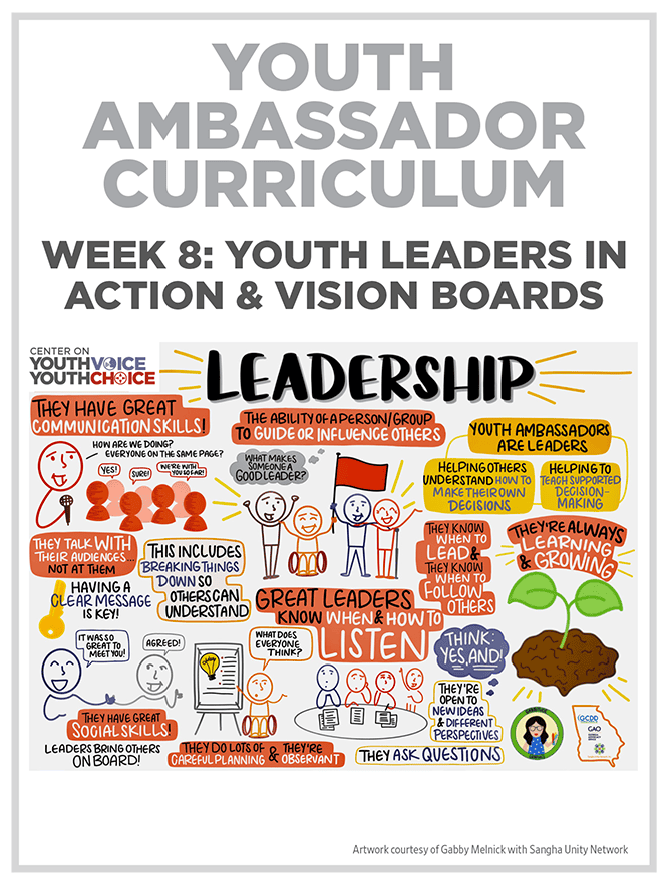
Week 8: Youth Leaders in Action & Vision Boards
Week 8 of the curriculum empowers participants to use self-determination and take control of their future by learning from real examples of self-advocates who lead their own lives. It also introduces Vision Boards as a creative, practical tool for visually planning personal goals and decisions.

Week 9: Goal Setting
Week 9 is designed to equip participants with the essential skills for planning and achieving their personal aspirations. It introduces effective frameworks, such as SMART goals, to ensure goals are clear, measurable, and attainable. The session empowers participants to take control of their future by defining what they want and mapping out the concrete steps needed to reach those objectives.
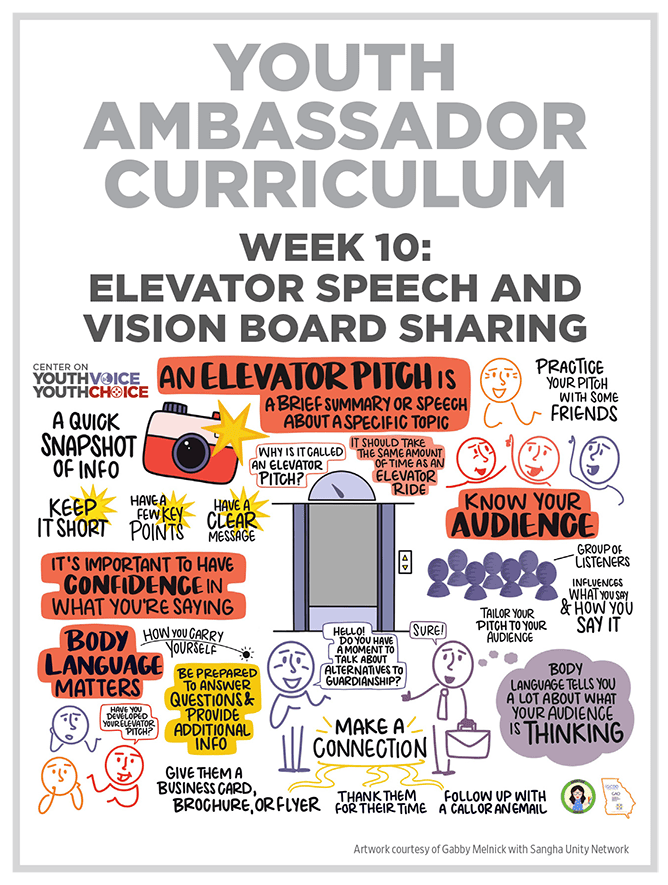
Week 10: Elevator Speech and Vision Board Sharing
Week 10 focuses on practical skills for communication and future planning. It guides participants on how to develop a compelling "elevator speech." An elevator speech is a brief, clear introduction that explains who you are, what you want, the value you bring, and the specific next step you're asking for. Additionally, it involves a final review and sharing of the previously created Vision Boards.

Week 11: Planning to Present
Week 11 offers guidance on how to consider your goals and move into action planning - how you will influence change in your states. What things do you need to consider? What allies can support you? What does your roadmap look like for accomplishing the change you want to see?
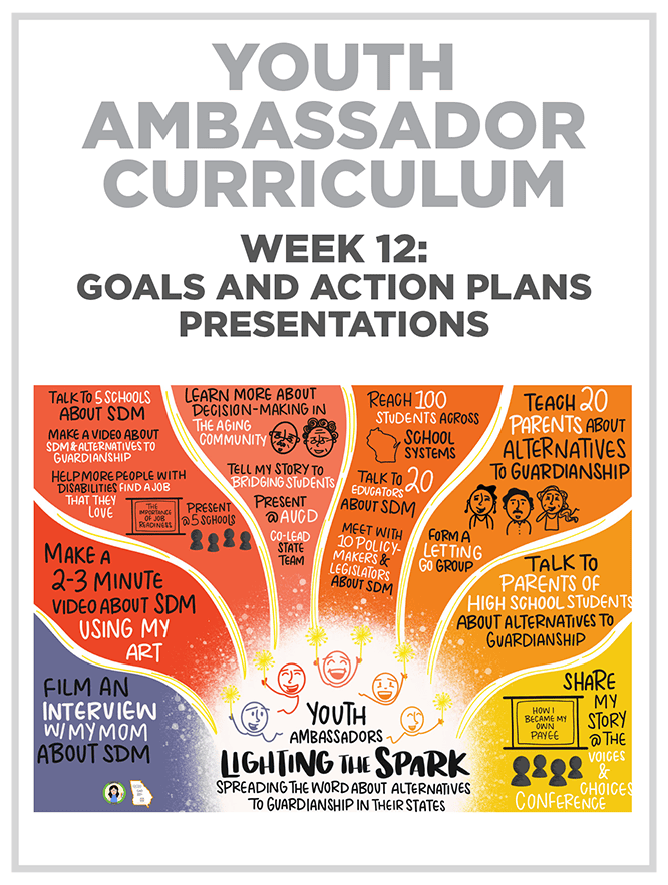
Week 12: Goals and Action Plans Presentations
This capstone session teaches youth to present the goals and action plans they developed during the 12-week program. Presenters review how to create an effective showcase, from selecting a topic and researching to designing content and practicing delivery. The session also outlines the next 12 months, explaining how youth ambassadors will work with state teams to carry out their plans during their ambassadorship.